
The Resonance of Timelines.
We do not meet reality directly. We meet it through perception, and perception is shaped by what we already believe. Two people can stand in the same room and live in different worlds, because each is reading the moment through a lifetime of assumptions about what is real, what is possible, and who they are. Belief is the lens, and the lens sets what we are able to see.
As life changes us, our perception changes with it. And we are never changed alone. Everyone whom life has shaped in the same way is, for a while, sharing a world with us: the same reality, read from a different seat. From the view of the quantum timeline, this is how we synchronize. We are not carried down a single fixed track. We keep landing in the timeline that matches who we have become, alongside everyone else who has become something similar. No one turns a dial. As we change, the shared world changes with us.
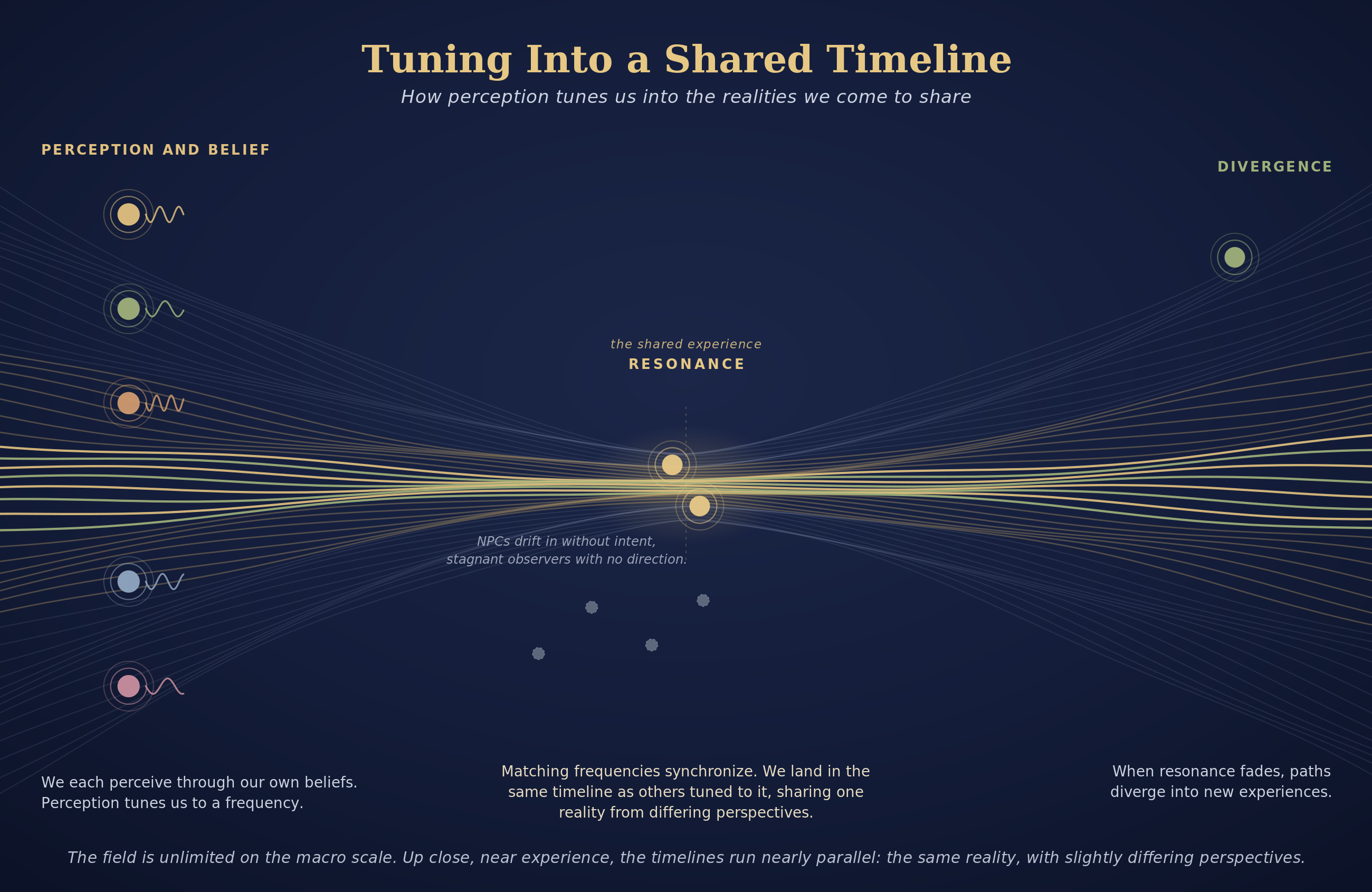
Not everyone is awake to how they are being shaped. What people sometimes call NPCs are not lesser beings. They are stagnant observers, people who have stopped choosing a direction and so fall into whatever timeline the current happens to carry them toward. Their movement is real, but unintentional. Without an aim, they are shaped by their surroundings and never notice it happening, and the reality they land in is the one that was handed to them.
This also explains the people who travel together for a stretch of a life. They stay in step not by accident but because life has shaped them in compatible ways, close enough to keep sharing experiences while each keeps their own perspective. It lasts exactly as long as the resonance lasts. When one begins to change, to release an attachment or take up a new belief, their perception shifts, and in time their path diverges from the other and opens onto new experiences. Nothing was broken. The resonance simply moved.
On the largest scale the field is effectively unlimited, a vast branching of every timeline that could be lived. But the closer we come to any actual experience, the more the timelines around it converge and run nearly parallel, until the people sharing it are living almost the same reality, separated only by the slight differences of perspective. Far out, endless possibility. Up close, near-agreement. Both are true at once, and which one we feel depends on how near we stand to the moment.
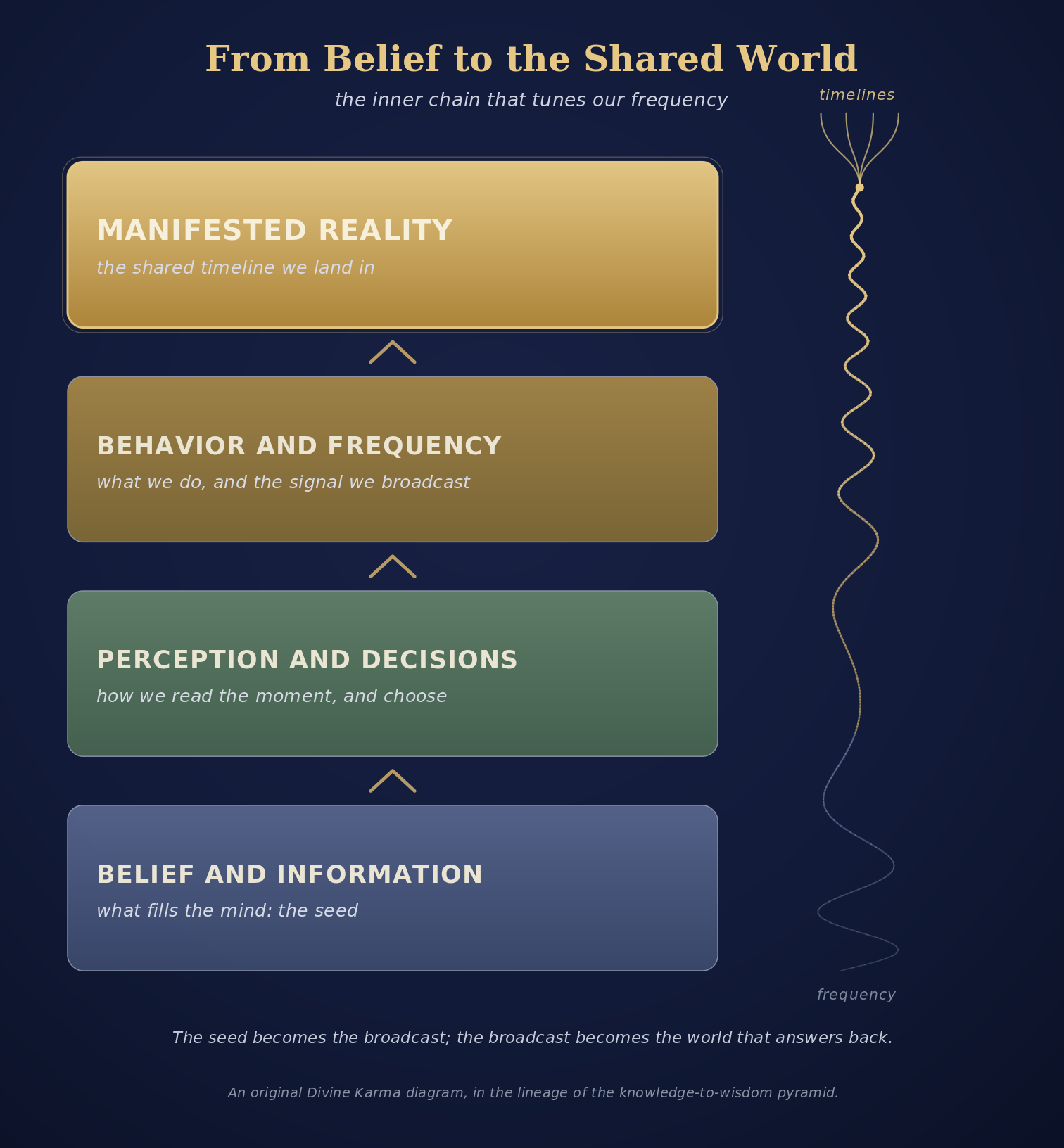
This chimes with a picture Mark Passio has drawn of how our reality is built, in which the quality of the information we take in rises through our decisions and our behavior into the reality we ultimately manifest. What fills the mind is the seed. It shapes how we perceive, and how we perceive is what places us in one shared timeline rather than another. So the inner work is never private. To change what fills your mind is to change how you see, and to change how you see is to change the timeline you walk and the company you keep on it. We are not trapped on a track laid down for us, and we are not sitting at a dial either. We are being shaped, and we can learn to see it happening.
David