
☙ For Reading Circles & Groups
Book Club Discussion Guide
A short guide for groups reading The Divine Series together. Discussion questions for each book, a suggested reading plan, and an open invitation to bring your circle close.
The series was written for the quiet reader, but it lands differently when read in conversation. The questions below are not tests. They are doorways into the kind of discussion that goes somewhere honest. Skip what doesn’t suit your group, sit longer with the ones that do.

Book I
The Journey of Self Discovery
The doorway in. Self, identity, and the quiet question of who we are underneath what we have been told.
Discussion questions
- The book opens with the idea of the “tabula rasa” mind we arrived with as infants. What beliefs about yourself do you suspect were absorbed rather than chosen? Which ones are you still living by?
- David writes that genetics give us a foundation but not a script. Where in your own life do you feel the tension between what you inherited and what you choose?
- The chapter on the Trinity of Truth places religion, science, and spirituality as three lenses on the same thing. Which of those three has shaped your inner life most? Which one have you most resisted?
- Karma is reframed in this book as the slow accumulation of belief and action, not reward or punishment. Did that reframe land for you? What would change if you held karma that way every day?
- The book asks the reader to question old beliefs without contempt. Pick one belief about yourself you noticed during the reading. What would softening it ask of you?
- If you had to name one moment in this book that opened a door, what was it? Where did it lead?

Book II
A Journey Towards Enlightenment
The middle stretch. Awakening, the masks we wear, and the courage of unlearning.
Discussion questions
- The opening compares life to an immersive game we have forgotten we are playing. Do you find that frame freeing or unsettling? What changes when you try it on?
- Plato’s cave is used as a metaphor for everyday consciousness. What is one wall in your own cave that you have already turned around to look at? Which walls feel still painted shut?
- This book is built around the idea that awakening is not a peak experience but a gradual unlearning. What have you been unlearning recently? Where do you find yourself relearning the same lesson?
- The masks chapter asks readers to notice the personas we wear in different rooms. Name one mask you keep up that costs you something. What would it look like to set it down for an hour?
- The book treats fear as an interference pattern, not a moral failing. How does that change the way you relate to fear in your life right now?
- Many spiritual books in this category sell certainty. This one offers a quieter posture. Did the tone meet you, or did you wish for something louder?
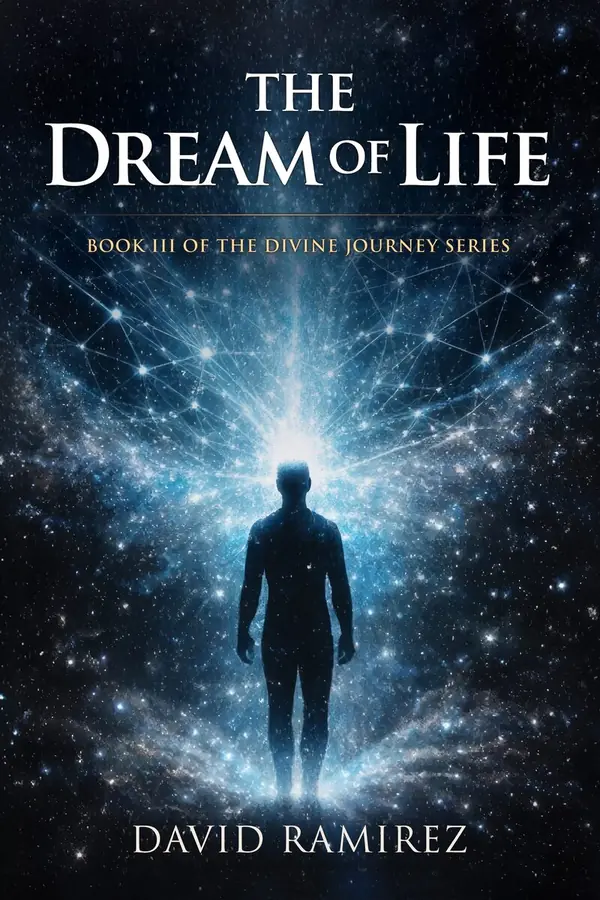
Book III
The Dream of Life
The homecoming. A meditation on the dreamlike nature of what we call real, and the freedom that comes with waking up inside it.
Discussion questions
- The book opens with the idea that what we call reality is an agreement of perception. What “agreement” have you stopped agreeing to recently? What did that cost or give you?
- The Dream of Matter chapter argues that solidity is more relational than fixed. Where in your life have you taken something for solid that turned out to be a story you were telling?
- Surrender is treated here as something different from giving up. What is the difference, in your own words, after reading this book?
- The closing pages return to the series’s throughline: the recognition that we never left home. Where do you most want to remember that, in your daily life?
- What is one practice, however small, you would like to keep doing because of this book?
- If a friend had read all three and asked you which moment of the series you would carry with you, what would you say?
A suggested 8-week reading plan
For groups that want a steady cadence. Adjust to suit your circle.
Bring your circle close
If your book club is reading the series, write to me. Where my schedule allows, I will join a virtual discussion or send a short audio note for your group. No fee, no agenda. Just the gift of meeting readers in conversation.